
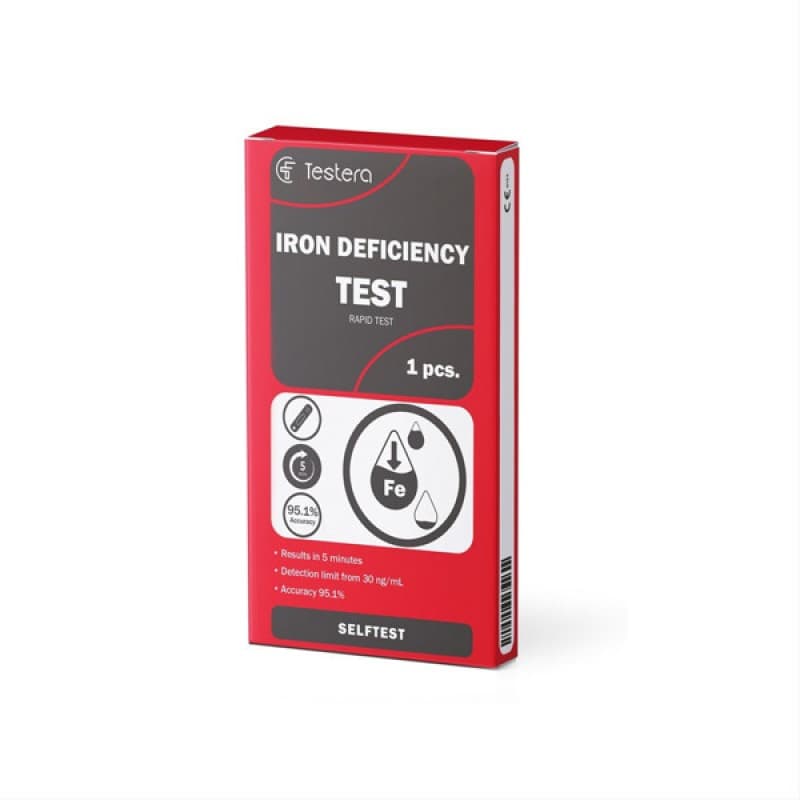
Iron Deficiency Anemia Rapid Test Kit
Price:$15.95
- Ships in 1-2 days
- Delivery within 20 days
Key Features
Ferritin Detection: Checks iron stores.
Finger-Prick Test: Simple blood sampling.
Fast Results: Results in 10 minutes.
95.1% Accuracy: Clinically tested performance.
Not getting enough iron can make you anemic. This can happen if you lose blood, are pregnant, or don't receive enough iron.
Ferritin is a protein that keeps iron in the liver and releases it as needed. Blood ferritin levels tell you how much iron is stored. Hemoglobin, which carries oxygen around in red blood cells, needs iron to work.
Most of the time, ferritin is located in cells and not in the blood. Liver illness, long-term infections, cancer, and autoimmune diseases can all raise your ferritin levels, even if your body's iron levels are normal. In this scenario, ferritin levels could not always reflect that there isn't enough iron.
What causes a lack of iron?
Not having enough iron in the body causes anemia. There are three main reasons why there is a lack of iron:
Not consuming enough meals that are high in iron
Poor absorption: Some medications and celiac disease make it hard for the body to take in iron
Blood loss: Hemorrhoids, heavy periods, and bleeding for a long time all drop iron levels
A woman needs more iron during pregnancy; therefore, not receiving enough could induce anemia.
Signs that you have anemia
Anemia slows down the flow of oxygen, which causes symptoms such as:
Lack of energy and sleepiness
Feeling lightheaded, dizzy, and short of breath
Heartbeats that aren't even or powerful
Nails that break easily, hair that falls out, and skin that is pale
Having trouble remembering things and paying attention
Not achieving well at school or at work
Problems with kids' behavior
Not wanting to have sex
Keeping Iron Under Control
It's really important to keep your iron levels stable. Iron is dangerous for you in large amounts, and not enough iron can cause anemia. The body can't manufacture iron, therefore it must come from diet or vitamins. Iron insufficiency is the most prevalent nutritional condition in the world. If you don't obtain enough iron every day, you could have iron deficiency.
Most illnesses that are related to iron can be treated with:
Medications for iron deficiency
Alterations in diet
Drugs
Other ways to treat disease
Iron tablets and foods that are high in iron can help with anemia.
Checking the amount of iron
The only real way to tell if someone is low in iron is to do a blood test. You can take this simple iron test at home without going to the lab:
Makes it evident how much iron there is
Easy side flow test with a finger prick
Results in 10 minutes that don't need lab work
95.1% accurate in clinical testing
Save time and money
Both healthcare professionals and people at home can use the Iron Deficiency Rapid Test Kit. It's ideal for rapid testing of iron levels because it gives you a dependable ferritin number.
Understand what your test results indicate
If your test results are outside the normal range, it doesn't necessarily mean you have a serious illness. Iron levels can alter because of birth control medications, estrogen therapies, and menstruation. Talk to a doctor if you need to.
Contents
Looking at the cassette
Dropper for capillary buffered solution
A pad with alcohol
Lancet for finger pricks
Expiration Date: 09/2027